Closing the Digital Gap – Heating With a Plan Instead of By Intuition

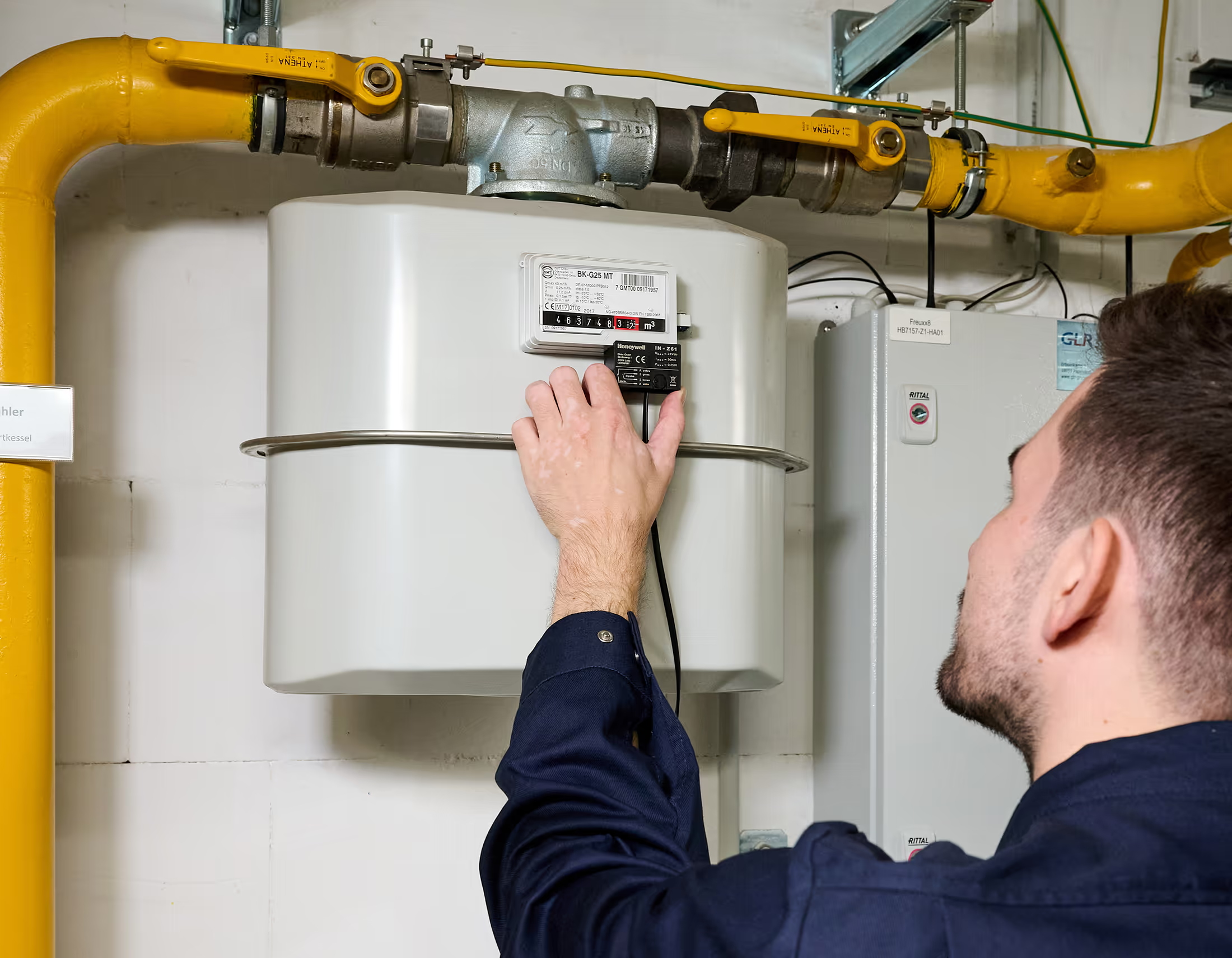
For a long time, energy-efficient renovation was seen as just a construction thing: swapping out windows, adding insulation, upgrading heating systems. But it's not just the tech that drives progress, it's how everything works together – and that can only be managed digitally.
The building sector accounts for a significant proportion of CO₂ emissions in Europe, at around 36 percent. According to the German Federal Environment Agency, space heating alone accounted for 25.6 percent of total final energy consumption in Germany in 2023, with hot water accounting for a further 5.1 percent – together totaling more than 30 percent. And while the electricity sector has made significant progress in recent years, emissions in the building sector have stagnated. The reasons for this are well known: a high proportion of existing buildings with outdated technology, sluggish processes, and a lack of transparency.
Many buildings are still heated based on gut feeling: better too much than too little, around the clock to be on the safe side. Heating curves are rarely checked, and systems are not adapted to actual usage profiles. The result is oversized running times, inefficient operation, and unnecessarily high costs. What's more, this energy blind spot undermines every climate policy goal.
Political goals and the reality of the situation
The political direction has long been defined: by 2045, the building sector in Germany has to be climate neutral. According to the dena flagship study, emissions must be reduced by 44 percent by 2030. However, there is a significant gap between political objectives and the reality in the housing industry. This gap is particularly striking where reliable data, automated control, and digital overview are lacking. Many decisions regarding existing buildings are still based on estimates or empirical knowledge rather than reliable real-time data. After all, if you don't know your energy consumption, you can't control it. A heating transition without digital support? Unthinkable.
Digital systems create transparency. They continuously measure, automatically analyze, and react in real time. They replace manual control with algorithmic intelligence and enable precise, predictive control. Today's heating systems can learn whether a room is actually being used, how the weather is developing, and what flow temperature is needed to ensure comfort without wasting energy.

Technology that thinks for itself
This digital intelligence is not an end in itself. It brings clear advantages for the housing industry: instead of rigid technology, a dynamic system is created that continuously adapts. Consumption peaks are smoothed out, sources of error are detected early, and maintenance cycles are optimized. All of this saves energy in the long term. In addition, digital solutions reduce personnel costs. Heating cost billing, legal reporting obligations, tenant communication: processes that used to take weeks can now be completed in minutes. And last but not least, planning becomes easier: investments can be made in a more targeted manner because it is clearer where action is actually needed.
But perhaps the strongest argument in favor of the digital approach lies somewhere else: it is the only one that works in both the short and long term. While construction measures can take years, digital systems deliver immediate results – without costly interventions or long lead times.
Practical example: The digital twin in application
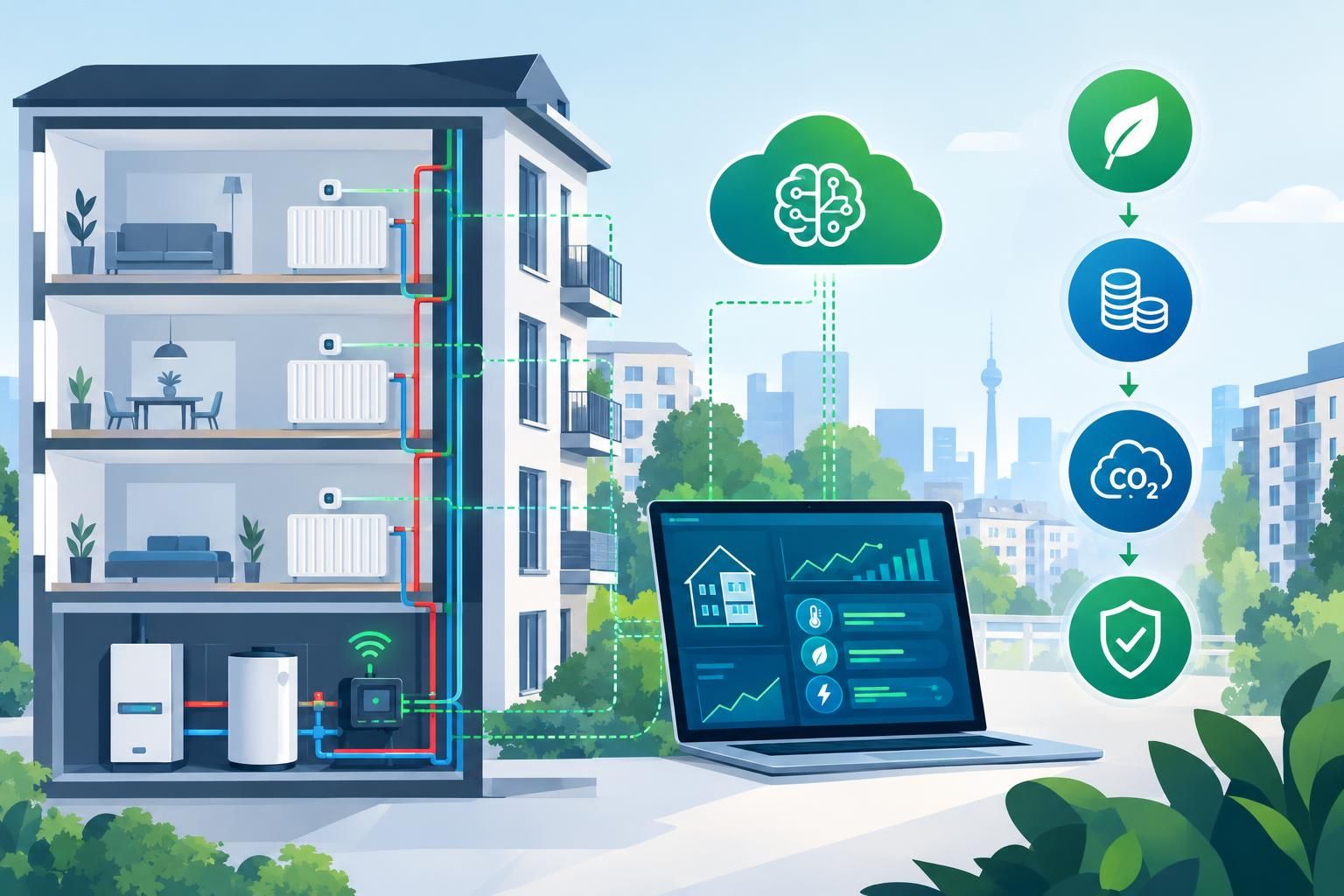
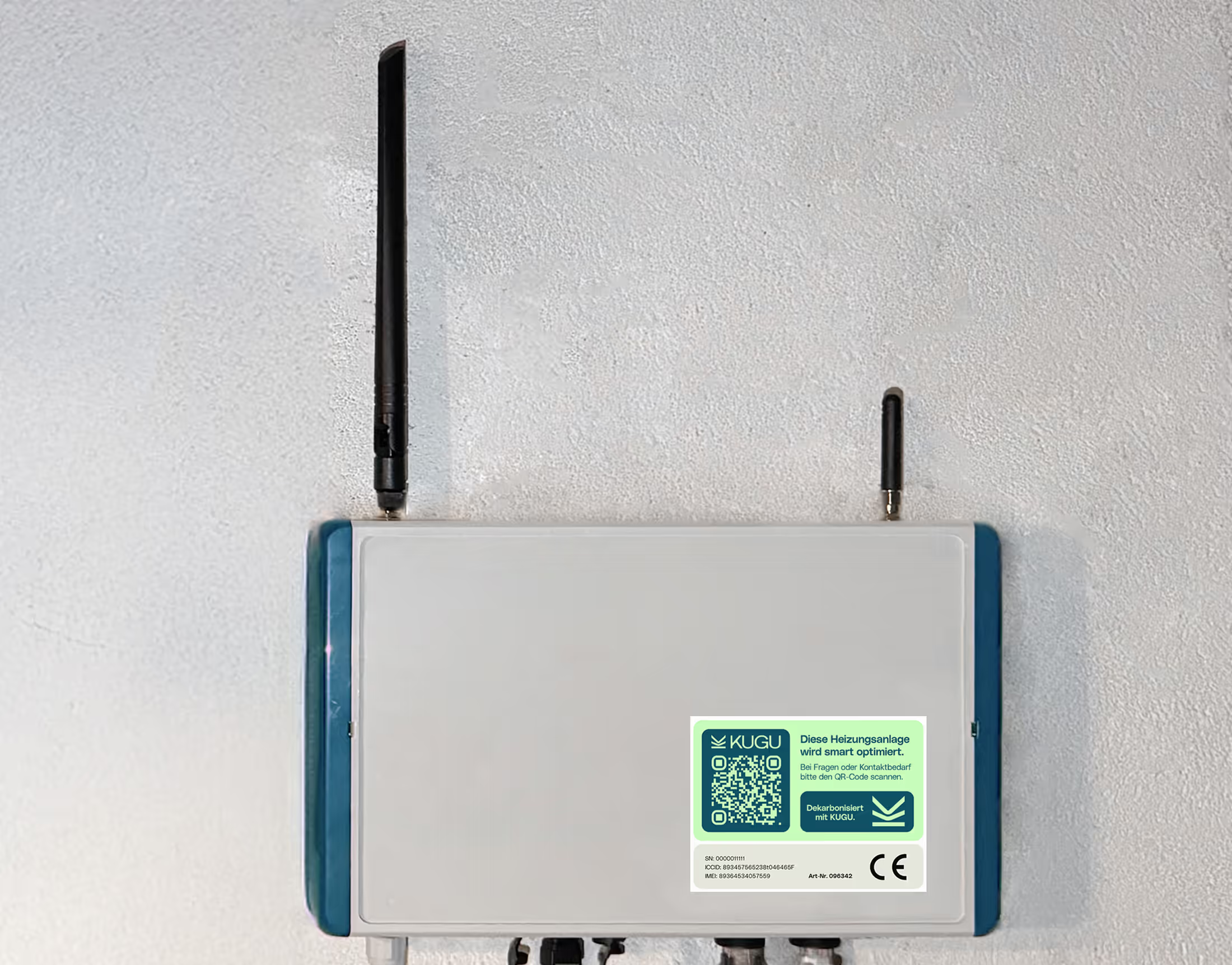
Berlin-based KUGU Home GmbH offers an example of how such a digital solution can be implemented. The PropTech company's platform digitizes consumption data and creates virtual replicas of entire buildings. This so-called digital twin combines technical parameters, consumption values, and external influences – such as weather data or occupancy patterns – into a real-time model. Based on this, the platform automatically and continuously regulates heating systems. The results speak for themselves: in municipal housing projects, energy savings of up to 30 percent were achieved during the last heating period, with no compromise on living comfort.
The open, modular architecture of the solution is particularly relevant for the housing industry in this approach. The platform is manufacturer-independent, can be seamlessly integrated into existing software landscapes, and thus enables gradual digitization without system disruption. In addition, it supports the legally required transparency of consumption, automates reporting, and significantly simplifies heating cost billing. KUGU relies on comprehensible models that can be flexibly adapted.
Digitization complements energy-efficient renovations
Digitalization is not a substitute for energy-efficient renovation, but rather the perfect companion. It ensures that investments are made where they have the greatest effect. It prioritizes. It simulates. It reveals what was previously hidden. And this is precisely where its greatest value lies: in the intelligent use of what is already available.

Digitalization as the new standard
Decarbonization of the building sector is inevitable: it is ecologically necessary, politically demanded, and economically sensible. The technology exists, the data is available – what is missing is an overview of consumption, technology, user behavior, and operational weaknesses. Without this overview, any modernization measure remains a shot in the dark. The solution? Data. And the ability to use it to identify opportunities for action.
This article was published in BundesBauBlatt 07-08/25.