Turning More Than One Lever: termios and KUGU Combine Heating Intelligence From the Basement to the Apartment


High energy costs, rising operating expenses, and increasing regulatory requirements: efficient heating is no longer just a matter of sustainability—it is above all a question of economic efficiency. This is where the partnership between termios and KUGU comes in. It connects two areas that are often considered separately in practice: smart heating control within apartments and digital, AI-driven optimization in the boiler room.
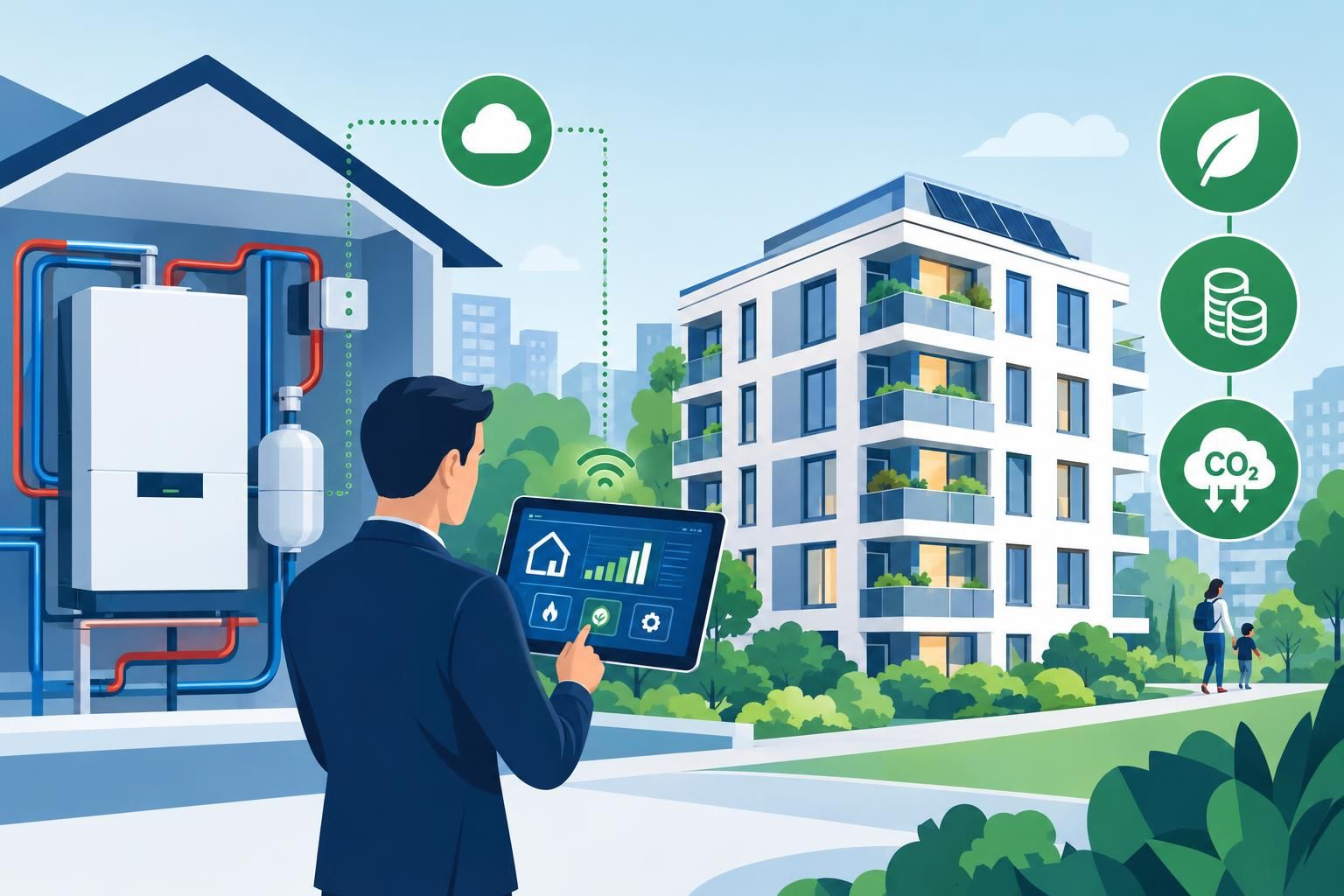
termios provides a smart thermostat system for apartments, enabling demand-driven control at the room level, including hydraulic balancing. KUGU focuses on the boiler room with its Energy Suite products: digital, automated, and designed to continuously optimize heating systems for measurably lower energy consumption.
Higher Quality Through Room Temperature Data
“We bring heating intelligence directly into the apartment and actively involve tenants in the process,” says Marco Maisel, Head of Sales at termios. “Through smart thermostats, gateways, and our cloud, room temperatures are used to continuously and demand-oriented optimize heat distribution in the building—including hydraulic balancing according to Method B. Together with KUGU, apartment data and system optimization work hand in hand—for lasting impact rather than short-term effects.”
Within individual units, the question arises: does the heat reach where it is needed? In every apartment, in every room? The aggregated room temperature data from termios provides valuable insights for this. It reveals supply patterns that are not always clearly visible from the boiler room alone—from under- or over-supply to slow-responding zones and unusual temperature trends. This allows optimization to be more closely aligned with actual heat delivery, reducing energy consumption and costs without compromising comfort.
Hydraulic Balancing: Meeting Requirements, Ensuring Stable Performance
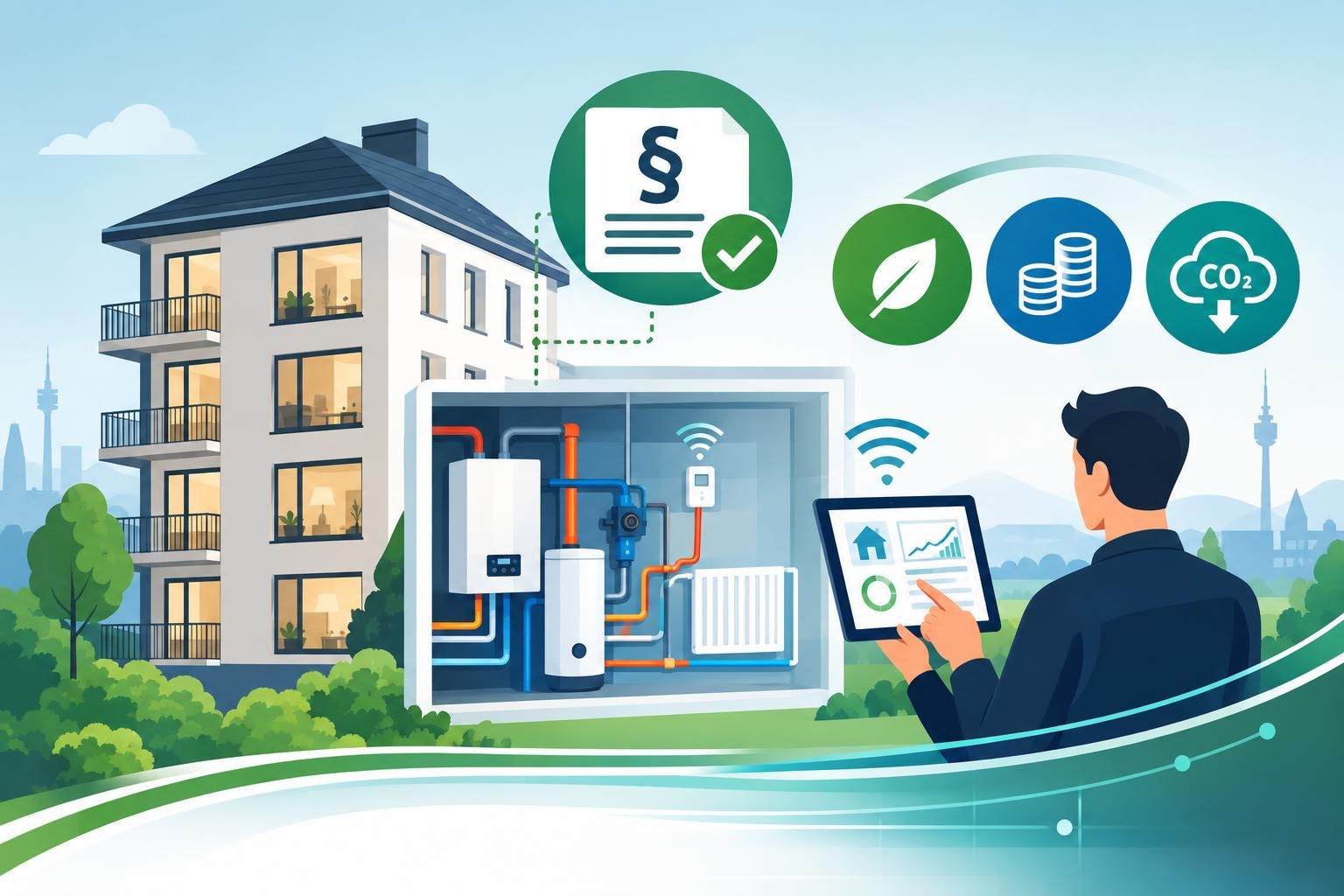
In the case of a heating system replacement in existing buildings, hydraulic balancing is often a condition for funding. It must be implemented accurately and, for example, documented transparently using the VdZ form. The key factor is that once defined target values and settings are maintained during operation and can be adjusted remotely if needed. At the same time, interventions in the existing heating system should be kept to a minimum. What is required are fast, scalable measures that can be implemented in existing buildings.
As a minimally invasive solution, termios provides the temperature-based apartment perspective; KUGU ensures in the boiler room that parameter control, target value specification, and documentation remain permanently transparent and verifiable at any time. At the same time, it is clear that a one-time setting of the heating system is not sufficient. Weather conditions, changes in demand, and manual interventions continually alter the initial situation—and the system must adjust accordingly.
The Amplification Effect: Combination Over Single Measures
Many portfolios rely on individual measures: monitoring in one area, balancing in another—and optimization takes place elsewhere. A greater impact, however, is achieved when the components work together:
- Room temperatures from the apartments make supply patterns visible.
- Digital optimization in the boiler room makes efficiency controllable.
- The combination of both approaches stabilizes results in daily operation.
This is where the KUGU Energy Suite comes into play: KUGU EOS enables automated, AI-driven optimization of system operations, while KUGU VIS provides transparency and decision-making support through monitoring and analysis. This allows energy and operating costs to be noticeably reduced while maintaining stable supply.
“Practical solutions that prove themselves in daily operation win out: transparent, automated, and economically efficient,” says Christopher von Gumppenberg, co-founder and CEO of KUGU. “With termios, we extend our optimization in the boiler room with valuable signals from the apartments, bringing together two levels that belong together in practice.”
End-to-End Heating Optimization for the Residential Sector
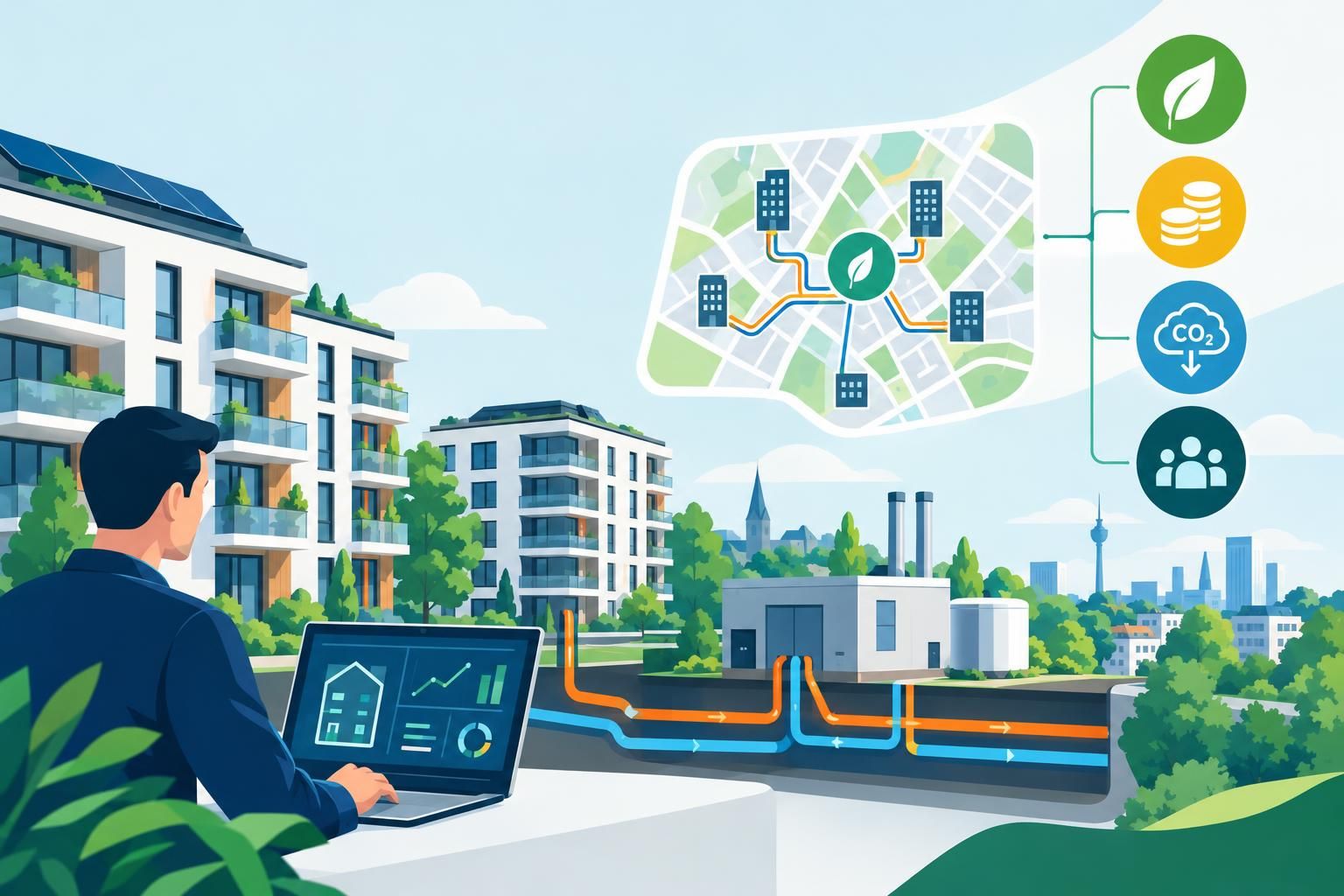
With termios and KUGU, a seamless perspective on heating optimization from the boiler room to the apartments is created. We are currently beginning the technical integration of termios and KUGU solutions and preparing for joint implementation in the upcoming heating season. For housing companies, this means more efficient heating systems and greater transparency regarding consumption, operating times, and control behavior. On this data basis, investments and optimization measures across the portfolio can be better prioritized and managed—rather than reducing heating optimization to a single lever. We look forward to collaborating with termios!