Heat with Foresight: From “Heating on Suspicion” to Demand-Based Control


The building sector is responsible for around 36 percent of CO₂ emissions in Europe and is therefore at the center of climate protection efforts. Achieving the EU's climate targets will require more than ambitious plans: concrete measures are urgently needed. A drastic reduction in energy consumption and the increased use of renewable energies are essential – but without digital technologies that intelligently control the existing infrastructure, this change will remain inefficient and expensive. With the help of smart platforms, owners and tenants can prevent their energy from going to waste.
Many conventional heating systems operate on the principle of static supply heating: heat is produced constantly, regardless of whether it is needed or not. The result? High energy losses and unnecessary costs. Digital systems, on the other hand, rely on demand-based heating. Sensors are used to record actual room usage, weather forecasts are incorporated into the calculation, and the heating output is dynamically adjusted. This makes digitalization a decisive lever for greater energy efficiency in the real estate industry: it stays warm, but only when it is really necessary.
The numbers speak for themselves
According to data from the Federal Environment Agency, 27.6 percent of total energy consumption in Germany in 2022 was used for space heating in buildings. A further 5.1 percent was accounted for by hot water. In 2010, the German government set itself the goal of reducing the heating requirements of buildings, specified as final energy consumption for heating, by 20 percent by 2020 compared to 2008 levels. This target was not achieved, with consumption falling by only 10.9 percent by 2020. There is enormous potential for energy savings, especially in older buildings. Without consistent optimization of heating systems, valuable resources are wasted and unnecessarily high costs are incurred. At the same time, the International Energy Agency (IEA) emphasizes that the energy sector is “the main cause of the polluted air that more than 90 percent of the world's population has to breathe.” Developments in the field of new, clean, renewable energies give cause for hope.
The future of heating control
Heating technology is undergoing a transformation: away from inefficient continuous operation and toward smart, data-driven optimization. Modern digital solutions rely on a combination of sensors, algorithms, and real-time analysis. While the one-time manual settings often offered can bring short-term efficiency, the real key to sustainable energy savings lies in the continuous, dynamic optimization of the system. These systems take into account the usage behavior of tenants, historical consumption patterns, location-specific weather data, and the thermal inertia of the building. This means that they learn and adapt to the actual needs of the residents. In addition, these systems can be seamlessly linked to renewable energy sources, so that the use of solar thermal or geothermal energy, for example, can be specifically optimized. The result is an intelligent overall system that increases both efficiency and sustainability.
From concept to practice
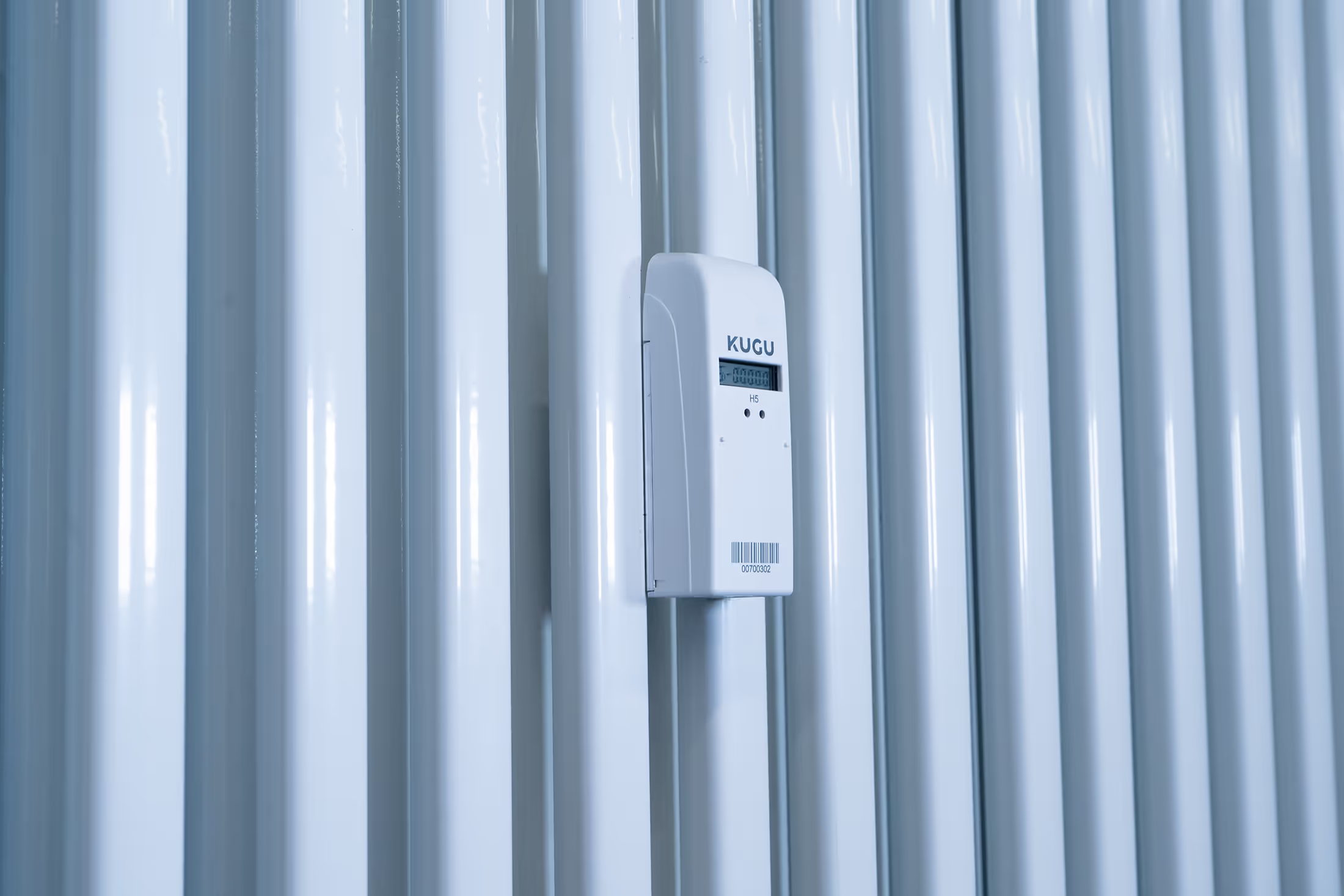
One company that follows this approach and even goes one step further is Berlin-based KUGU Home GmbH: The KUGU platform lays the foundation for the decarbonization of buildings and the digitization and automation of all energy-related processes in real estate – without the need for structural interventions in the building fabric. Once the building's parameters have been recorded, KUGU creates a digital twin, i.e., a virtual representation of the building that is updated in real time with sensor data. This allows heating systems to be precisely calibrated and continuously optimized. The digital twin maps the thermal behavior of a building and allows various scenarios to be simulated. Flow temperatures can be adjusted automatically, unnecessary heating phases are avoided, and the efficiency of the entire system increases. This can save up to 30 percent in energy, energy costs, and CO₂ emissions without negatively impacting thermal comfort.
Clear vision instead of flying blind
KUGU aggregates, analyzes, and visualizes data from the entire building stock in real time – with transparency as its top priority. The digital control unit ensures that energy consumption is optimized, legal requirements are met, and operating processes are made more efficient. Residents and owners can see at a glance where there is potential for savings and how changes in heating behavior are affecting costs. The running costs can be passed on to tenants – but instead of pitting sustainability against additional costs, KUGU's solutions generate real financial savings beyond the new costs. This creates an ecological and socially acceptable approach to the decarbonization of buildings and thus to sustainability. The digital approach also pays off in maintenance: thanks to predictive maintenance, problems can be identified before they occur. Sensors report irregularities, such as sudden drops in temperature or increased consumption, and automatically trigger maintenance requests.
The future starts now
Digital technologies are transforming the decarbonization of the housing industry from a challenge into an economically and ecologically viable solution. Ultimately, it is clear that without forward-looking, dynamic control, the potential for energy savings will remain largely untapped. Sustainability begins with intelligent technology – and with the conscious decision to make buildings smarter.

This article was published in BundesBauBlatt 04/25.