AI-Powered Energy Optimization: The Direct Path to Economic Efficiency


In times of volatile energy markets and steadily rising operating costs, the efficiency of heating systems is taking on new strategic importance. Many buildings conceal considerable savings potential: heating systems that function perfectly from a technical standpoint but consume significantly more energy than necessary in continuous operation. This is where digital, AI-powered optimization comes in. It serves as a direct lever for systematically reducing this oversupply and making efficiency precisely measurable, all without costly refurbishments or structural interventions.
In unrenovated existing buildings in particular, heating systems are often still controlled on the basis of outdated empirical values. Rigid heating curves and inefficient continuous operation are standard there. Smart, data-driven solutions offer a way out by relying on the precise interplay of sensor technology, modern algorithms and real-time analytics. While manual adjustments often have only a short-term effect, the key to long-term success lies in dynamic adaptation.
Modern systems take into account not only historical consumption patterns but also current user behavior, precise local weather forecasts and the thermal inertia of the building fabric. The technology learns continuously and adapts to the building, not the other way around. Optimization takes place unnoticed in the background, without tenants having to change their behavior.
A new operational level for system operation
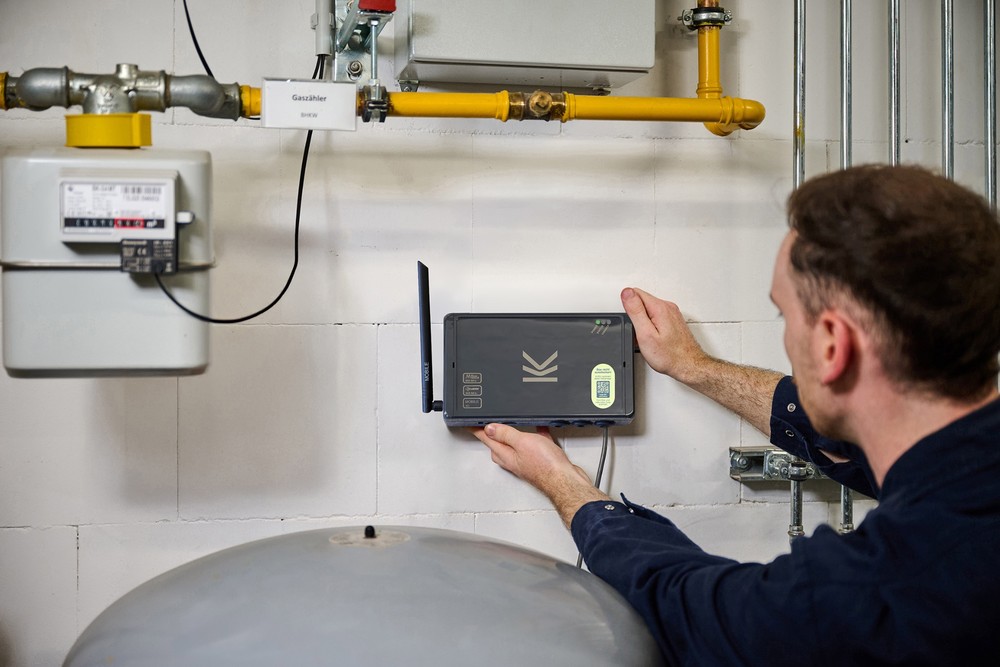
Berlin-based KUGU Home GmbH is expanding the possibilities for the cost-effective operation of heating systems with its solutions. Existing systems are digitally connected quickly and independently of the manufacturer, without the need for complex structural interventions. The foundation is an individual digital twin that brings together building physics as well as operating, consumption and weather data to model heating behavior as accurately as possible.
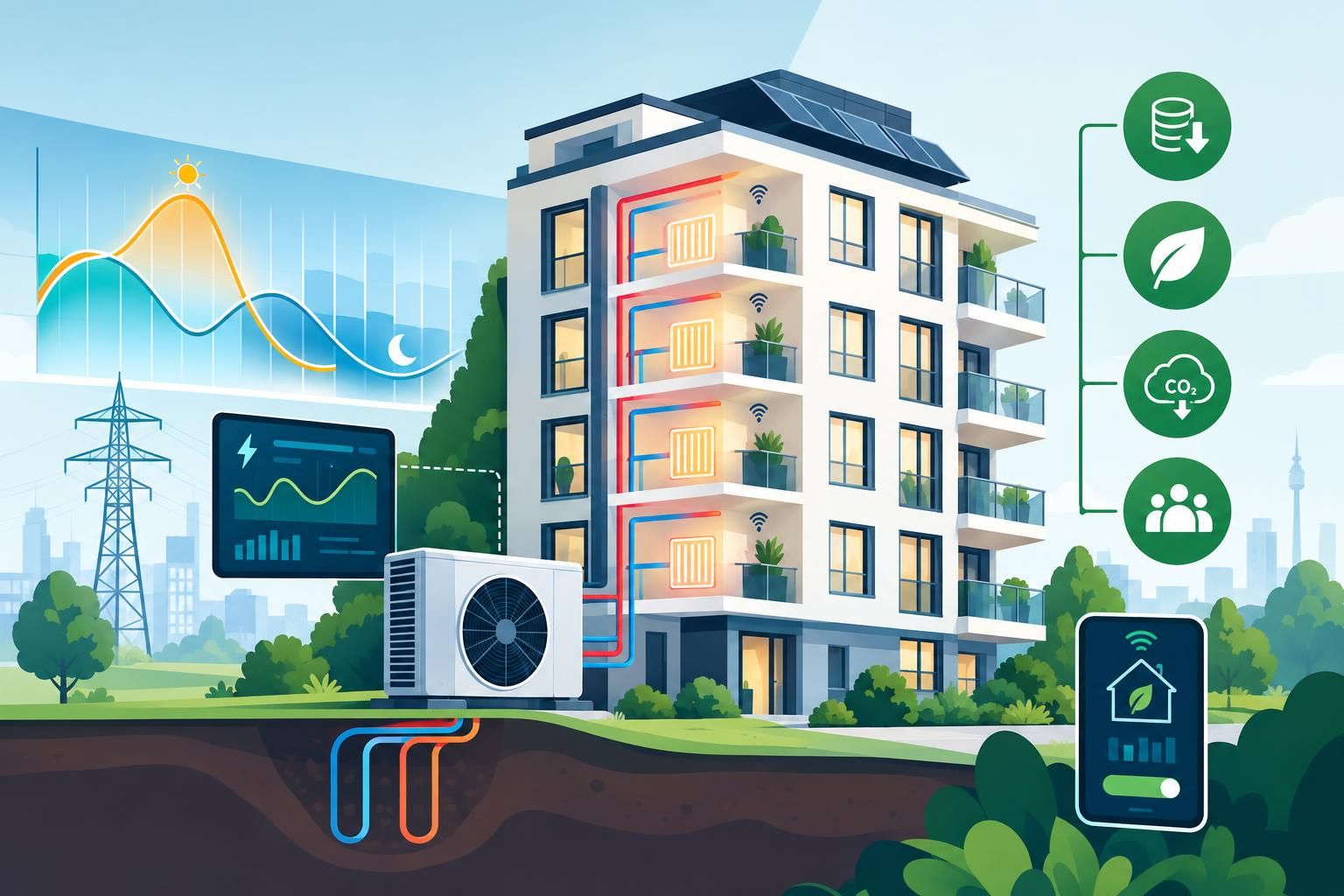
Building on this, the Energy Optimization System (EOS) analyzes ongoing system operation using AI-powered algorithms. It calculates the optimal operating mode on a daily basis and controls the heating system automatically. A notable innovation: in systems with heat pumps, EOS can now factor variable electricity costs into the optimization. With dynamic electricity pricing, KUGU adds a highly relevant dimension to optimization and is increasingly evolving from a digital control tool into an AI agent in the boiler room.
The portfolio is complemented by the Visual Information System (VIS), which serves as a digital control center that presents consumption, operating and performance data transparently. This makes inefficiencies and technical anomalies visible early on; a complete system diagnosis is possible after just a few days. For operators, this means faster responsiveness and a more solid basis for strategic decisions.

Guaranteed savings as an economic lever
Guaranteed savings as an economic leverThe results speak for themselves: by combining intelligent control and transparency, energy costs and CO2 emissions can be reduced by more than 20 percent on average. A key advantage for operators is that the costs can be passed on to tenants. Since the actual savings significantly exceed the costs, the result is a model that combines cost-effectiveness with social responsibility. KUGU underscores this promise with a contractually fixed savings guarantee of at least 12 percent.
Operating data supports district heating strategies
Optimization pays off not only in unrenovated existing buildings but also in buildings that have undergone energy-efficient modernization. Despite an improved building envelope, further efficiency potential can be unlocked during ongoing operation, for example through a more accurate assessment of the technical condition of the system and through an operating mode that takes economic signals from the energy market into account. Reliable energy data is also valuable when switching energy sources, for example when converting to district heating. District heating strategies for existing buildings are only effective if solutions take effect quickly. This requires operating data, for instance to adjust the contracted heat capacity to actual demand or to identify optimization potential.
The digital transformation of the building stock
The digital transformation of the building stockFor the real estate industry, digitalization is the only way to reduce heating costs sustainably. Solutions such as KUGU's enable measurable results with minimal investment risk and consistent comfort. In doing so, they make a significant contribution to the cost-effective decarbonization of the building sector. The focus is shifting away from mere appeals to change behavior toward intelligent technology that automates efficiency and guarantees comfort.

Read the full article in Facility Management Magazin 04/26.