Remote Heating Monitoring: Real-Time Data That Cuts Costs

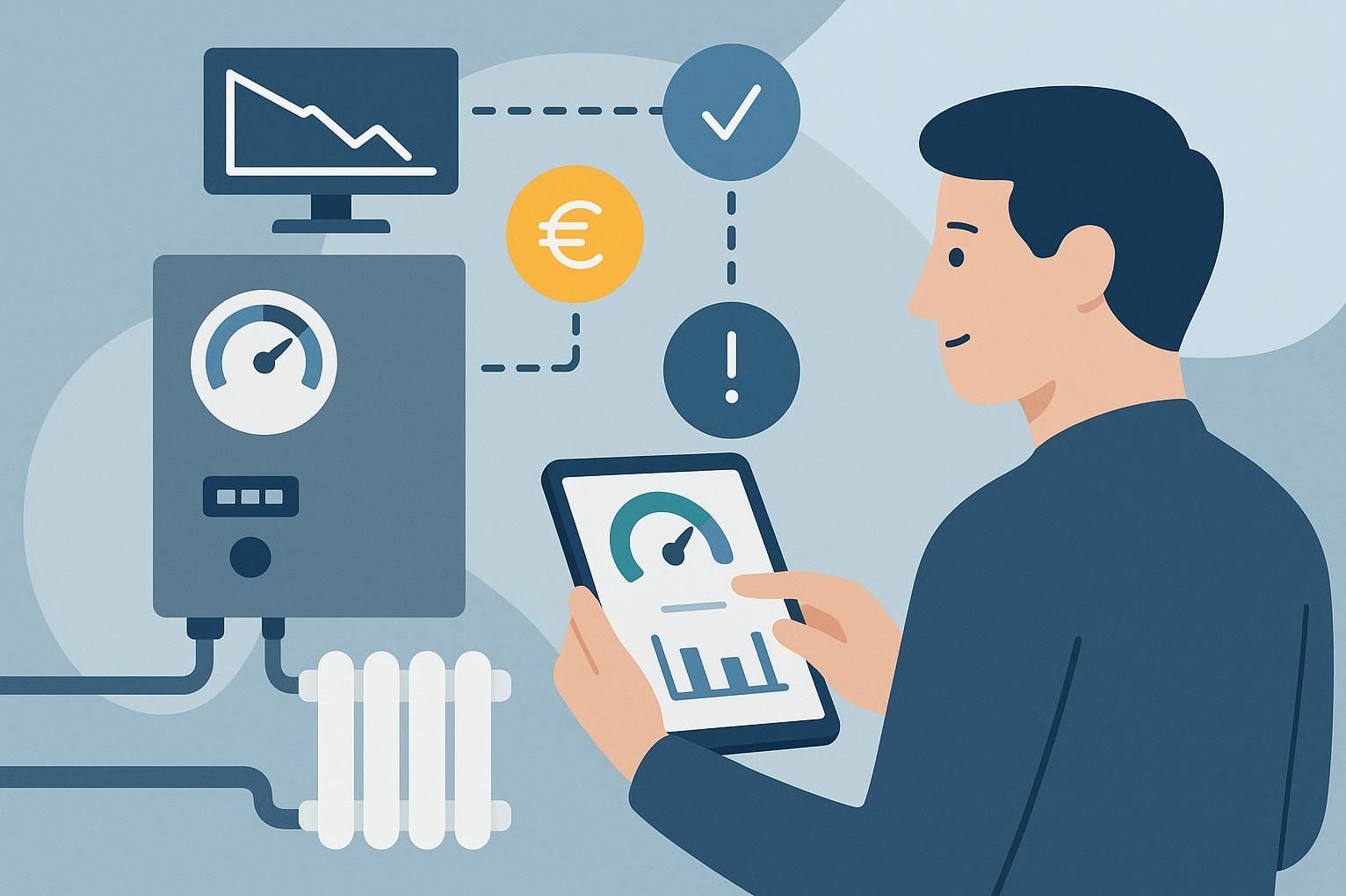
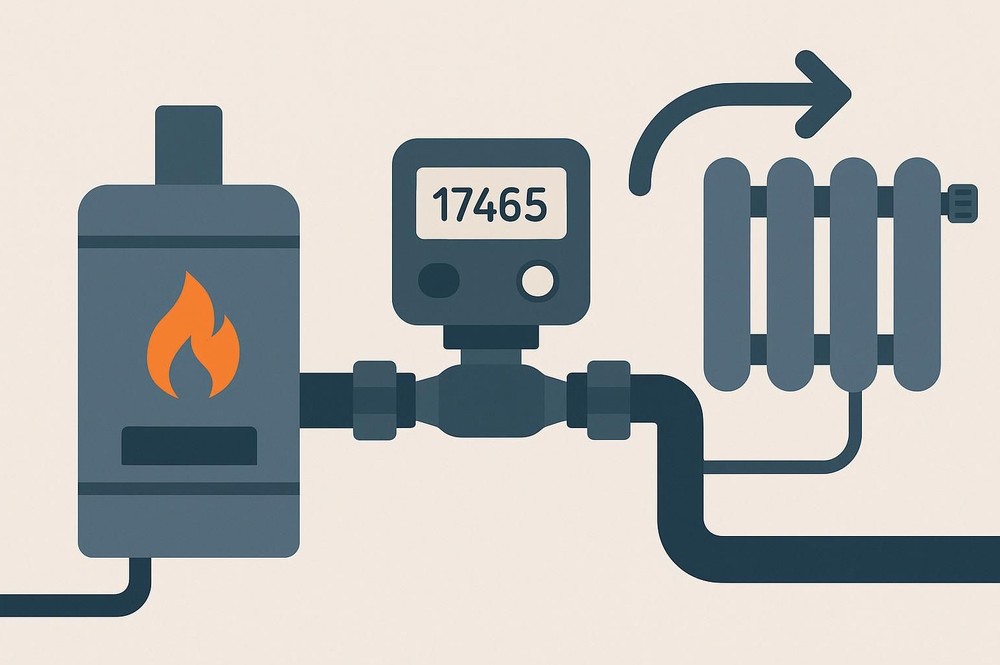
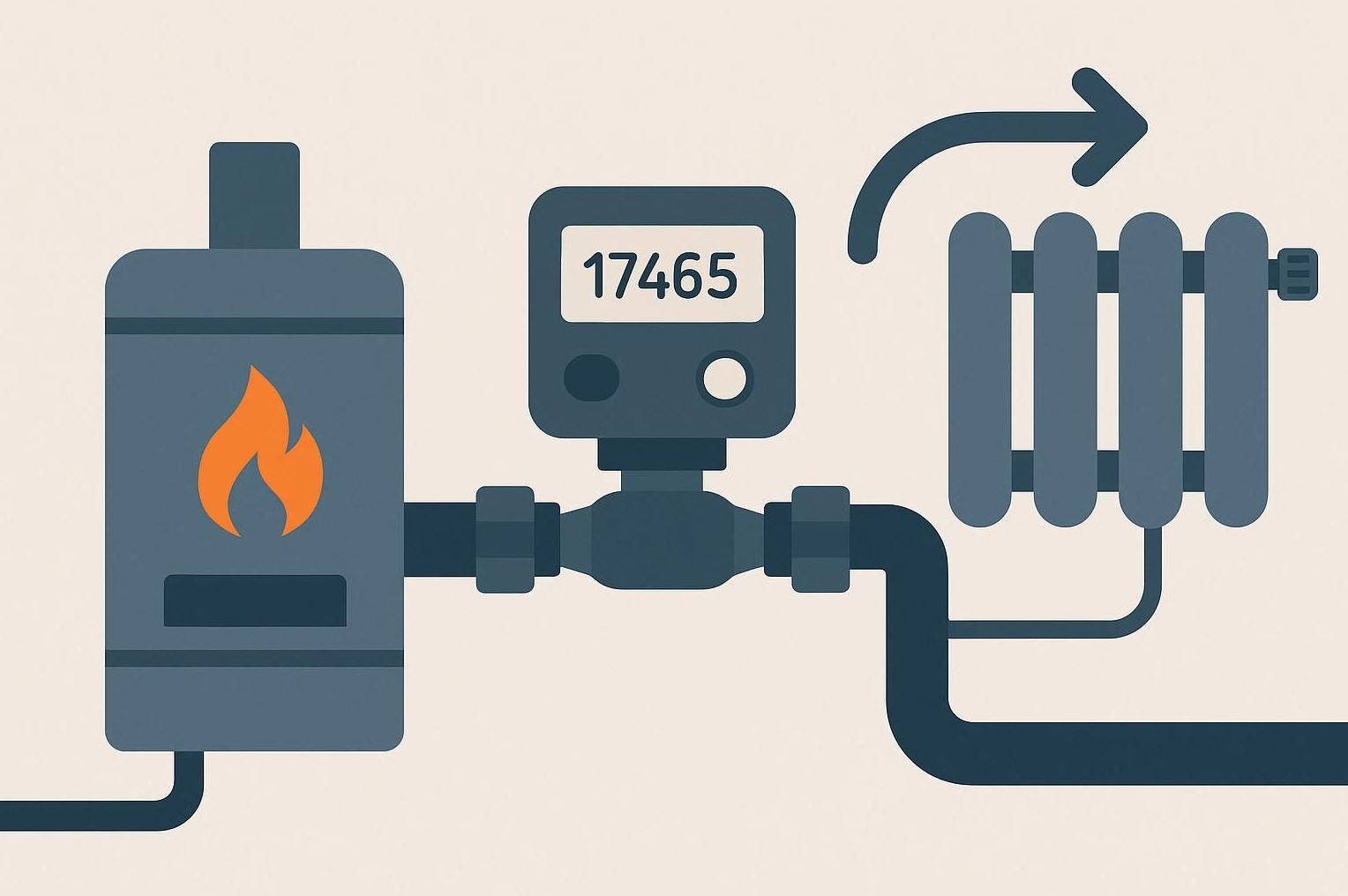
Remote heating monitoring shows flow and return temperatures, consumption and operating status across your heating system in real time, and raises an automatic alert whenever a threshold is crossed, long before a technician ever sets foot on site. That means you catch faults earlier, avoid expensive breakdowns and often cut energy costs without a single extra site visit.
For portfolio operators, it is no longer enough for a heating system to simply run. What matters is how economically it runs, because that is exactly what drives energy costs across the whole portfolio. This is where platforms like KUGU VIS come in: they work with the meters and controllers that are already installed, with no new hardware in the boiler room.
Three figures explain why this matters right now.
- Only 8.4% of German housing companies currently use software for heating monitoring, according to a 2025 GdW survey.
- A BDI study found that roughly 60% of all heating systems in Germany run inefficiently without this ever showing up in day-to-day operations.
- Germany's Buildings Energy Act requires many existing systems to be inspected by 2026 or 2027, with fines of up to €50,000 for non-compliance.
What does remote heating monitoring show in real time?
Remote heating monitoring delivers live data on flow and return temperatures, energy consumption and operating status, and automatically flags any threshold breach as an alert. KUGU VIS visualizes all the relevant operating data of a heating system, from meter readings to temperature and consumption values, and catches faults and inefficiencies early, automatically and without a site visit.
In practice, that means you can spot a return temperature that stays too high for too long, a boiler that cycles on and off more often than it should, or a pump running outside its normal operating window. A standard annual maintenance check rarely picks any of this up. These patterns only show up during ongoing operation, and a single inspection once a year barely captures them.
Cross-industry research on sensor-based predictive maintenance, including work from McKinsey and the US Department of Energy, points to a potential of up to 70% fewer unplanned outages and 18 to 30% lower maintenance costs. Those figures come from industrial applications in general, but they give a plausible sense of what early fault detection can also achieve in a boiler room.
What does "operating status" actually mean? It refers to the mode a component is running in at any given moment, such as heating, hot water production, cycling or fault. Only once you record these states continuously do you see how often, and for how long, a system is running inefficiently.
What technical setup does remote monitoring need in existing buildings?
The technical setup runs through sensors on the system, a gateway for data transmission and the meters that are already in place, with no need to replace the heating system itself. At KUGU, that job falls to the KUGU Hub, a manufacturer-independent gateway that connects to the existing heating controller.
The platform is compatible with more than 150 controller types from major manufacturers, including Bosch, Buderus and Vaillant. The article on connectivity for existing heating systems covers exactly how this setup works and which components you already have that make it possible.
For housing companies, that means real protection for existing investments: a 20-year-old boiler stays exactly as it is, but the connection gives it the data foundation of a modern system. Remote monitoring itself never requires swapping out the heating system, which matters a great deal when renovation budgets are tight.
How much energy and cost does remote monitoring actually save?
Remote monitoring combined with subsequent optimization saves an average of more than 20% on energy, costs and CO₂ emissions, according to KUGU, with a contractually guaranteed minimum saving of 12%. External assessments back this up: the dena initiative KEDi puts the potential from monitoring and optimization at up to 30%, while the Fraunhofer Institute for Building Physics names up to 18% as an established reference value across the existing building stock.
The Gewobag pilot with KUGU shows what this looks like in a real portfolio. Across ten equipped properties, roughly 260,000 kWh of energy was saved between October 2024 and March 2025. Over the same period, the properties also saved more than 50 tonnes of CO₂ and over €18,000 in energy costs. The 12% savings guarantee was met in all ten properties, and in several cases clearly exceeded.
Two figures, one pilot phase: A later, more detailed evaluation of the same ten Gewobag properties, covering 1,055 heating days, arrives at higher numbers: 313,039 kWh of energy saved, €21,915 in energy costs and 62.9 tonnes of CO₂, at an average saving of 23%. Both figures come from official sources, but they differ in evaluation period and methodology. Either way, the 12% savings guarantee was clearly exceeded in both analyses.
When you can see flow temperature, consumption and alerts on an ongoing basis, you catch exactly the costly faults that would otherwise only surface in the annual bill. The article on heating monitoring in multi-family buildings shows how granular this data actually gets in practice.
How do KUGU VIS and KUGU EOS put remote monitoring into practice?
KUGU VIS (Visuelles-Informationssystem, or visual information system), through its VIS Betriebstransparenz feature, handles the actual remote monitoring: meter readings, temperatures and operating status all come together in real time and become comparable across the entire portfolio. VIS Anlagendiagnose adds to this by assessing hardware condition, operating behavior and overall system efficiency against more than 20 criteria right after installation.
That diagnosis gives you concrete recommendations for action on every single component. The feature was developed together with Gewobag ED and presented at KUGU Days 2026 in Berlin. The article on system diagnostics for existing buildings covers the methodology behind this diagnostic process in more detail.
While VIS creates the transparency, KUGU EOS (Energie-Optimierungssystem, or energy optimization system) builds on it to handle the automatic optimization. This starts with a digital building twin: first, the system records the building's construction year, renovation status and key system data. It then measures heating load and temperatures during live operation for 3 to 6 days and calibrates the values using AI. Based on that, EOS calculates the required heating output every day using more than 30 weather parameters and feeds new setpoints into the heating system every 15 minutes.
Both features belong to the KUGU Energieplattform, which is built around optimization, transparency and sector coupling. The KUGU Messdienstplattform covers billing processes separately.
Which Buildings Energy Act deadlines raise the pressure on existing systems?
Under the Gebäudeenergiegesetz, water-based heating systems in buildings with six or more residential units must be inspected, and optimized where necessary, after 16 years in operation. For systems installed in 2010, that deadline arrives in 2026.
| Year heating system was installed | Deadline for inspection and optimization |
|---|---|
| 2010 | 2026 (16 years in operation reached) |
| Before October 2009 | September 30, 2027 |
Violating the operator obligations under sections 60a to 60c of the Buildings Energy Act can result in fines of up to €50,000. Continuous remote monitoring supplies exactly the operating data you need to meet both the inspection requirement and the hydraulic balancing obligation in a documented, defensible way.
There is an economic angle here too: recurring costs for operation, monitoring and regular checks of operational readiness count as allocable operating costs under section 7(2) of the Heizkostenverordnung (Heating Costs Ordinance). Pure repair costs, by contrast, do not fall under this rule.
How does a portfolio rollout actually start in practice?
At KUGU, a rollout starts with a pilot of 5 to 10 buildings over one heating season, roughly 3 to 6 months, aiming for at least 12% energy savings and at least a 2 percentage point improvement in system efficiency. Only after that evidence is in place does the rollout extend to the rest of the portfolio.
That is exactly how it played out at Gewobag: the pilot phase with 10 properties grew into a rollout that now covers more than 300 properties, up from an initial 250. KUGU itself now supports more than 3,500 systems and over 300,000 residential units across Germany and Austria, according to its own figures, with around 50 employees based in Berlin.
- Initial consultation: Portfolio, system types and target buildings get reviewed together.
- Pilot phase: 5 to 10 buildings get connected and evaluated over one heating season.
- Rollout decision: The documented savings determine whether the rollout expands.
- Portfolio scaling: Additional properties get connected step by step, as at Gewobag, which grew from 10 to more than 300.
If you would like to assess this for your own portfolio, an initial consultation is the place to work out which buildings suit a first pilot and what savings potential is realistic.
Remote monitoring as part of your existing-building strategy
Inspection requirements and cost-effectiveness now rest on the same data. A system that is monitored continuously meets the Buildings Energy Act's documentation requirement as a side effect, while also providing the foundation for automated optimization through systems like KUGU EOS.
For most existing portfolios, the simplest first step is a system that flags problems on its own, well before the next major renovation is due. A pilot project over a single heating season shows within a few months whether this pays off across your own building stock.
What questions about remote heating monitoring come up most often?
How quickly does remote heating monitoring pay for itself?
One heating season, meaning 3 to 6 months, is usually enough for a pilot to deliver reliable savings figures. KUGU customers have seen average savings above 20% of energy costs, with a contractual minimum guarantee of 12%. How fast that pays off depends on your existing consumption levels and the size of the system.
Does the existing heating system need to be replaced for remote monitoring?
No, replacing the heating system is not necessary for the connection. A manufacturer-independent gateway connects to the existing controller and continues to use the meters already in place, compatible with more than 150 controller types from major manufacturers.
What faults does remote monitoring catch that regular maintenance misses?
Return temperatures that stay too high for extended periods often go unnoticed during a once-a-year maintenance check. A boiler cycling too frequently, or a pump running outside its normal operating window, is just as easy to miss. Only continuous recording during live operation makes these patterns visible.
Are the costs of remote heating monitoring recoverable from tenants?
Partly: under section 7(2) of the Heizkostenverordnung, recurring costs for operation, monitoring and checks of operational readiness count as allocable operating costs. Repairs and pure maintenance work, on the other hand, stay with the landlord and are excluded.
When does the Buildings Energy Act inspection requirement apply to existing heating systems?
For systems installed in 2010, the inspection and optimization requirement under section 60b of the Buildings Energy Act already applies from 2026. For systems installed before October 2009, the deadline runs until September 30, 2027. This affects water-based systems in buildings with six or more residential units.