Intelligent Optimization: Energy Efficiency Up, Costs Down


The building sector is responsible for around 30 percent of CO₂ emissions in Germany and is therefore at the center of climate protection efforts. However, no significant reduction in emissions has been observed in recent years. Reducing energy consumption and increasing the use of renewable energies is therefore essential.
To ensure that this transition is cost-effective and socially acceptable, digital technologies and smart solutions that intelligently control the existing infrastructure are indispensable.
Heating technology is undergoing change
Away from inefficient continuous operation, toward smart, data-driven optimization.
Modern digital solutions rely on a combination of sensors, algorithms, and real-time analysis. While the one-time manual adjustment often offered can bring short-term efficiency, the real key to sustainable energy savings lies in the continuous, dynamic optimization of the system. These systems take into account the usage behavior of tenants, historical consumption patterns, location-specific weather data, and the thermal inertia of the building.
This means that they learn and adapt increasingly well to the actual needs of residents. In addition, these systems can be seamlessly linked to renewable energy sources, enabling the targeted optimization of solar or geothermal energy, for example. The result is an intelligent overall system that increases both efficiency and sustainability.
AI-supported optimization of the heating system
One company that follows this approach and even goes one step further is Berlin-based KUGU Home GmbH. Their new product “KUGU EOS” (Energy Optimization System) combines building technology expertise with AI-supported optimization. It lays the foundation for the decarbonization of buildings and the digitization and automation of all energy-related processes in real estate – without the need for structural interventions in the building fabric.
Once the building's parameters have been recorded, KUGU creates a digital twin, i.e., a virtual representation of the building that is updated in real time with sensor data. Based on the individual digital twin and daily weather and consumption forecasts, each heating system is precisely calibrated and continuously optimized: Unnecessary heating phases are avoided and the efficiency of the entire system increases.
Transparency in plant operation
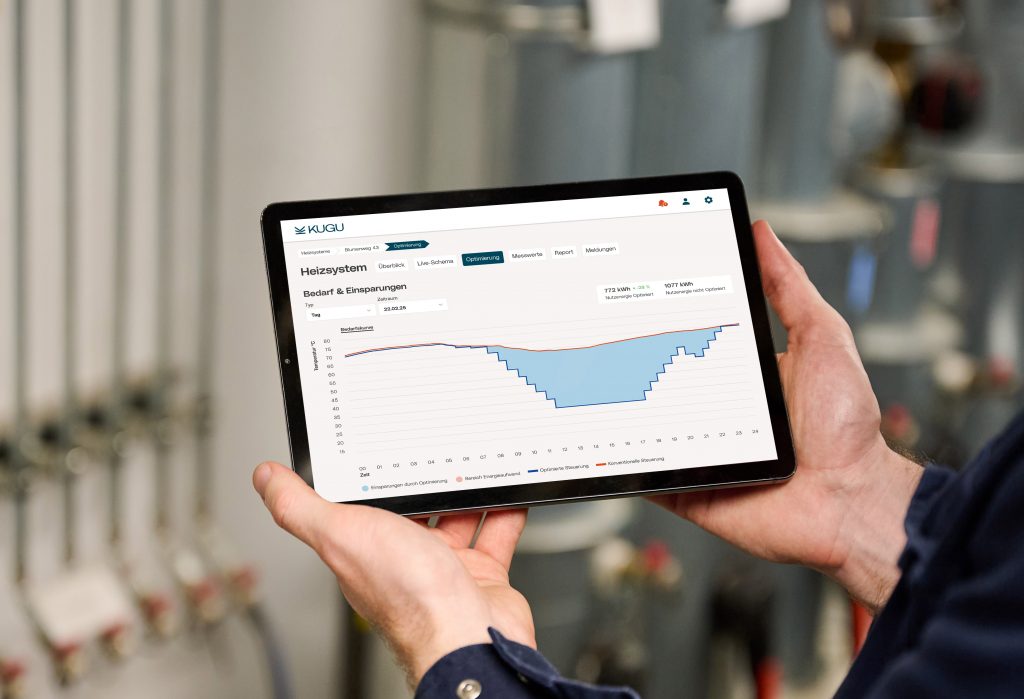
In addition, KUGU aggregates, analyzes, and visualizes data from the entire building stock in real time via the “KUGU VIS” (Visual Information System) – with transparency being the top priority. All relevant operating data, from meter readings to temperature and consumption values, is visualized in real time.
Residents and owners can thus see at a glance where there is potential for savings and how changes in heating behavior are affecting consumption. In addition, the system can detect errors and inefficiencies early on, automatically and without on-site inspection, enabling informed system evaluation and rapid response to changes.
Guaranteed maximum efficiency
On average, over 20 percent in energy, energy costs, and CO₂ emissions can be saved, while maintaining a high level of comfort for tenants. The running costs can be passed on – but instead of pitting sustainability against additional costs, the solutions generate real financial savings beyond the new costs.
This creates an ecological and socially responsible approach to decarbonizing buildings and thus to sustainability. KUGU is so convinced of this that it guarantees its customers savings of at least 12 percent.
Gewobag convinced after pilot phase
The Berlin-based Gewobag Wohnungsbau-Aktiengesellschaft extensively tested the solution during the last heating period. During a pilot phase, ten Gewobag buildings were able to achieve noticeable energy and emission savings by using the KUGU solution: “We were able to achieve KUGU's savings guarantee of 12 percent in all properties and in some cases even significantly exceed it,” explains Dominik Unger, authorized signatory and head of technical services at Gewobag ED.
Between October 2024 and March 2025, the ten properties equipped with KUGU saved around 260,000 kWh of energy, over 50 tons of CO₂, and more than €18,000 in energy costs. The success is convincing: there are plans to expand the project to 250 systems.
Read the full article here.