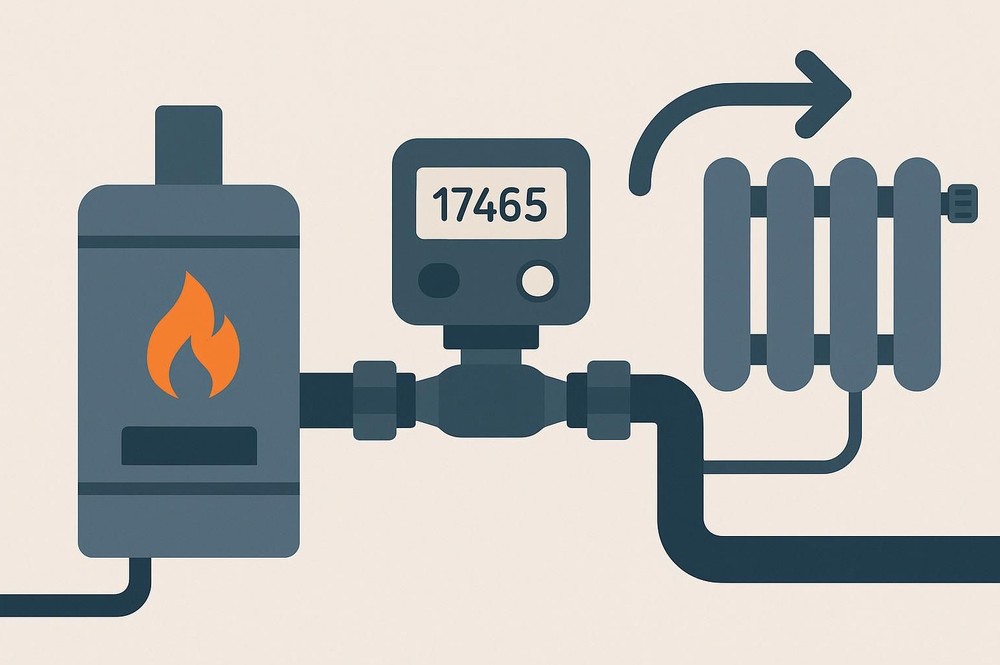
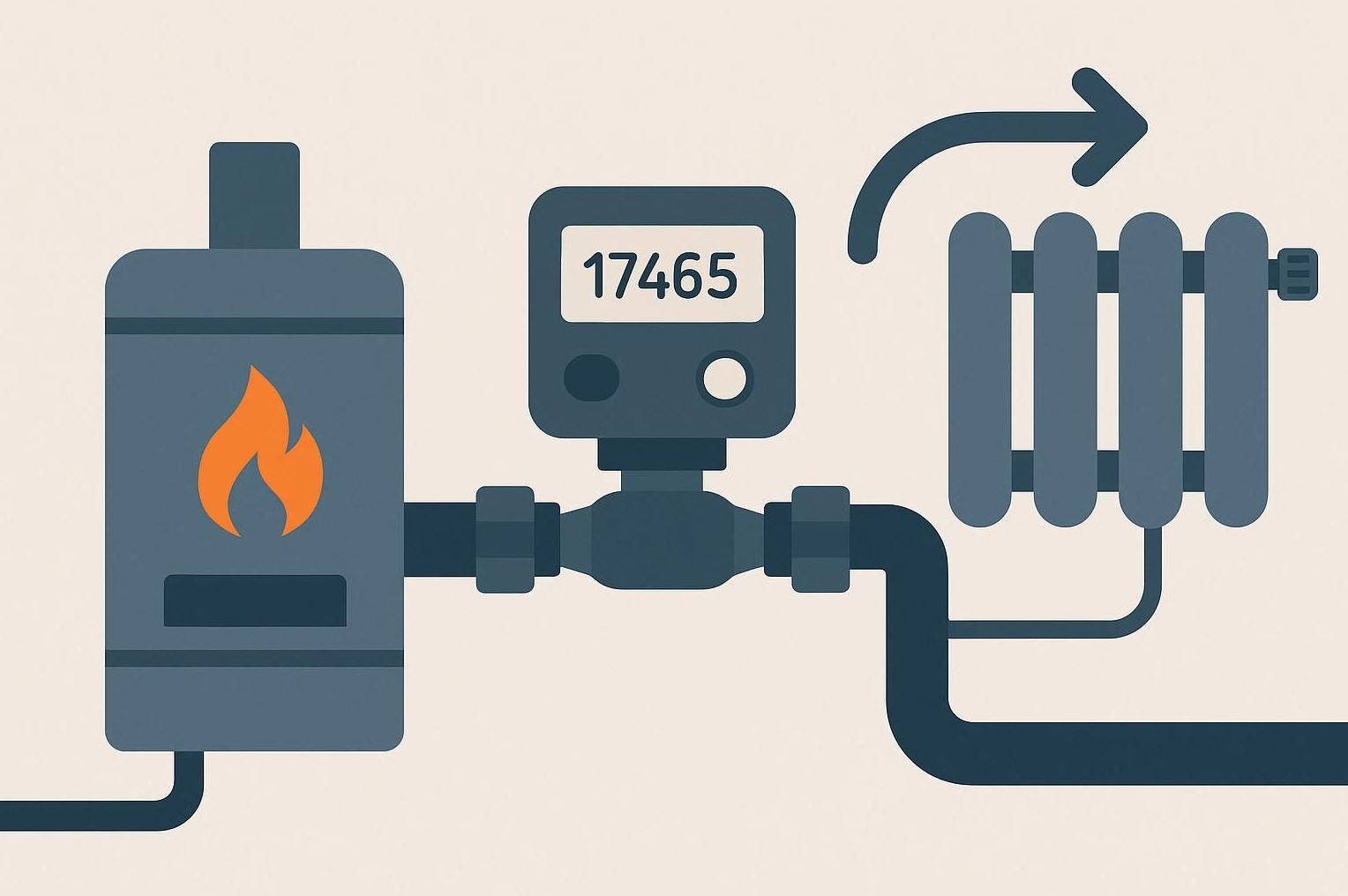
GEG Sections 60b and 60c: Heating Inspection and Hydraulic Balancing Duties for Housing Companies


Section 60c of Germany's Buildings Energy Act (GEG) requires owners of buildings with at least six residential units to carry out and document a hydraulic balancing every time a new heating system is installed. For older systems already in operation, Section 60b instead orders a recurring inspection and optimization. Both rules have applied since October 2024 to buildings with six or more residential units.
For housing companies managing several hundred or several thousand residential units, that covers nearly the entire multi-family building stock. Both obligations replaced the previously temporary EnSimiMaV regulation on 1 October 2024 and have since become a permanent part of the Buildings Energy Act. Since the law was proclaimed on 28 July 2026, the GEG has continued under its new name, the Buildings Modernization Act (GModG); according to current legal commentary, Sections 60b and 60c remain unchanged in substance and in their numbering.
Missing a deadline, or checking the wrong obligation, risks duplicate work and a fine. The four points that matter most:
- Section 60b requires a recurring inspection and optimization of existing heating systems, with deadlines running no later than 30 September 2027.
- Section 60c applies only once, at the point a new heating system is installed, and requires hydraulic balancing with written proof.
- A digital monitoring system under Section 71a GEG can replace the on-site inspection under Section 60b if it automatically detects efficiency losses.
- Intentional or reckless violations carry fines of up to 5,000 euros per property.
Which buildings does GEG Section 60b cover, and what deadlines apply?
Section 60b GEG applies to buildings with at least six residential units or comparable independent units, wherever a water-based heating system is running (oil, gas or biomass boilers). Heat pumps are not included; they fall under their own inspection rule in Section 60a GEG. How much time you have then depends entirely on the system's installation year.
For heating systems installed after 30 September 2009, the inspection and optimization must be completed within one year of the system reaching 15 years in operation. If the system was installed before 1 October 2009, a single uniform deadline applies: 30 September 2027. For a building with a boiler installed in 2010, that works out concretely: the inspection must take place by the end of 2026 at the latest, one year after the 15-year mark falls due in autumn 2025.
Worth watching: A single industry blog reports that, as part of the GModG rollout, a uniform deadline of 30 July 2027 may apply from 1 January 2027, with repeat inspections potentially being dropped altogether. This claim has not yet been confirmed by other independent sources and should not be treated as a confirmed deadline until there is official clarification.
Who is allowed to carry out the GEG Section 60b heating inspection, and what gets checked?
Only a qualified professional may carry out the Section 60b inspection: a heating installer, a chimney sweep, or an energy consultant trained accordingly under Section 60a (3) and (4) GEG. A self-assessment by the property management company does not satisfy the requirement.
The inspection focuses on the settings that waste the most energy in daily operation when they are set wrong:
- Flow temperature and heating curve: Is the setting matched to the building's actual heat demand?
- Circulation pump: Is it an efficient, demand-controlled pump, or an oversized older model?
- Insulation condition: Are pipes and fittings in the boiler room adequately insulated?
- Reduction potential: Can the flow temperature be lowered further without compromising heating comfort?
If the qualified professional identifies optimization needs, measures such as a night-time setback, improved circulation, or a lowered heating limit temperature must be implemented within one year of the inspection. Anyone who already has standardized building automation under Section 71a GEG in place, or who operates under an energy efficiency contract such as an energy performance contract, is exempt from the entire inspection duty. According to dena's assessment, a digital monitoring system also satisfies this requirement if it detects efficiency losses continuously and automatically and names a person responsible for operations.
Good to know: Heat pumps fall under their own regulation. Heat pumps newly installed from 2024 onward in buildings with six or more residential units must undergo an operational check after one full heating season, and no later than two years after commissioning. Without remote monitoring, this check repeats every five years.
What does GEG Section 60c require for hydraulic balancing, and who does it apply to?
Section 60c GEG requires hydraulic balancing of water-based heating systems in buildings with six or more residential units or comparable units, whenever a new heating system is installed or set up there. Hydraulic balancing distributes the flow of heating water across all radiators in a building so that each room gets exactly the amount of heat it was designed to receive.
The precise trigger matters here: the obligation only kicks in after a heating system is installed or set up for commissioning. For existing systems that were already in operation before 1 October 2024, this creates no automatic retrofit obligation. That reading is confirmed by a legal analysis of Section 60c GEG, a point many guides leave fuzzy. Section 60c becomes relevant mainly when a boiler is replaced, a new heating unit is installed, or larger system renewals take place in existing buildings.
The balancing itself must follow Method B of the VdZ technical guideline "Optimizing Existing Heating Systems," meaning a room-by-room heat load calculation under DIN EN 12831, or an equivalent procedure, including digitally automated ones. The simplified Method A does not meet the legal requirement. Written confirmation of the balancing must include the following details:
- Building heat load: the calculated heat demand of the areas supplied.
- Heat generator output: the actual generator output measured against the heat load.
- Design temperature: the flow and return temperature assumed for the building.
- Controller settings: the heating control parameters set after balancing.
- Expansion vessel pressure: the checked system pressure as an operating indicator.
This confirmation must be provided to tenants without delay upon request. A properly executed hydraulic balancing can, according to industry figures, save between 5 and 15 percent of heating energy, though these figures come mainly from studies on single and two-family homes and should be treated as a rough guide rather than a precise average for multi-family portfolios.
GEG Section 60b vs. Section 60c: The key differences compared
The core difference lies in the trigger: Section 60b applies to existing systems and repeats over time, while Section 60c applies once, when a new system is installed. Both sections address the same building size and took effect on the same date, but they differ clearly in how they're applied, including how compliance is documented.
| Criterion | GEG Section 60b | GEG Section 60c |
|---|---|---|
| Subject | Inspection and optimization of existing heating systems | Hydraulic balancing for newly installed systems |
| Buildings covered | 6+ residential units/comparable units | 6+ residential units/comparable units |
| Trigger | Existing, water-based system (no heat pumps) | Installation or setup of a new heating system |
| Deadline | 15 years + 1 year after installation, or no later than 30 September 2027 for older systems from before 1 October 2009 | At commissioning of the new system, no retroactive effect on older systems |
| Repetition | Recurring, in principle | One-off per newly installed system |
| Who carries it out | Qualified professional (installer, chimney sweep, energy consultant) | Specialist firm using Method B (DIN EN 12831) or an equivalent digital method |
| Proof required | Inspection result, optimization implemented within 1 year | Written confirmation with heat load, controller settings, system pressure |
| Exemption | Digital monitoring under Section 71a or an energy efficiency contract | Not provided for in the statutory text |
Non-compliance with GEG Sections 60b and 60c: fines and proof obligations
Anyone who intentionally or recklessly fails to have their heating system inspected under Section 60b, or skips the required hydraulic balancing under Section 60c, commits a regulatory offense under Section 108 GEG. This can be punished with a fine of up to 5,000 euros, regardless of how many residential units the building contains. For a larger portfolio with several inspection deadlines falling due each year, that exposure adds up quickly.
On documentation: you need to be able to hand tenants the written confirmation of hydraulic balancing under Section 60c without delay whenever they ask for it. The law sets no comparable obligation to present documentation to tenants for Section 60b, but complete, building-specific records still pay off during a regulatory audit. Anyone who has documented consistently can show, for every system, exactly when it was inspected, what condition it was in, and what optimization step followed.
How can housing companies meet GEG Sections 60b and 60c efficiently across a portfolio?
Sending staff to walk through several hundred heating plants one by one ties up personnel and still leaves you guessing which system is due next. With digital plant diagnostics, you get the same operating data an on-site inspection would collect, but continuously and across the whole portfolio at once.
A monitoring system that automatically detects efficiency losses and assigns them to a named responsible person also meets the criteria of Section 71a GEG. That exempts you from the recurring on-site inspection under Section 60b. Operating data such as flow temperature, heating curve, and pump runtime, as described in Plant diagnostics for heating: spotting faults in existing systems earlier, cover the same content points required under Section 60b (1), including whether the heating curve still matches actual heat demand or an oversized pump is drawing unnecessary electricity.
For putting this into practice across an existing building stock, KUGU VIS Anlagendiagnose, part of the KUGU Energieplattform, makes faulty operating patterns and optimization potential visible across an entire system portfolio. The resulting VIS Betriebstransparenz shows where an inspection is due and which properties would benefit most from hydraulic balancing under Section 60c, especially where a new system is already planned. For a structured approach to rolling out this kind of monitoring, Introducing heating monitoring: a successful rollout in existing buildings walks through the concrete steps. Implementing the resulting optimization measures under Section 60b, such as an automated night-time setback, is covered in Digital heating control in existing buildings: how to cut costs.
Operating data as the common thread linking both obligations
In practice, housing companies do best when they keep a single, continuously updated data source per building that covers both obligations at once. Anyone who knows, on an ongoing basis, how a heating system is actually running can spot inspection needs under Section 60b and sensible moments for balancing under Section 60c long before a deadline becomes urgent.
That turns the obligations from a chore into a side benefit: every inspection becomes an opportunity to surface real savings potential in the building, with the legal proof taken care of along the way. Start where the deadlines sit closest, with systems from before October 2009 and their 30 September 2027 cutoff, and build the data foundation out from there across the portfolio.
Frequently asked questions about GEG Sections 60b and 60c
Does GEG Section 60c apply retroactively to heating systems installed before October 2024?
No, Section 60c only applies when a new heating system is installed or set up for commissioning. For existing systems already running before 1 October 2024, this creates no automatic retrofit obligation. The rule only becomes relevant again once a system is replaced or newly installed.
From how many residential units does the GEG Section 60b inspection duty apply?
The inspection and optimization duty applies from six residential units or comparable independent units in a building. Smaller multi-family buildings with five or fewer units fall outside this rule. What counts is the number of units in the specific building, not across the entire portfolio.
Can a digital monitoring system replace the on-site inspection under GEG Section 60b?
Yes, provided the system meets the criteria for standardized building automation under Section 71a GEG: continuous monitoring, automatic detection of efficiency losses, and a named person responsible for operations. Once these conditions are met, the recurring on-site inspection no longer applies.
What fine can result from violating GEG Section 60b or Section 60c?
Anyone who intentionally or recklessly violates the inspection or balancing duty risks a fine of up to 5,000 euros per violation under Section 108 GEG. This amount applies regardless of building size. Repeated or systematic violations across multiple properties increase the financial exposure accordingly.
Does the Buildings Modernization Act (GModG) change anything about the deadlines in Sections 60b and 60c?
The GModG replaced and renamed the GEG as of 29 July 2026, and according to current legal commentary, Sections 60b and 60c remain unchanged in substance and in their numbering. A few reports mention a possible unification of inspection deadlines from 2027 onward, but this has not yet been officially confirmed. Until there is a binding clarification, the established deadlines under Sections 60b and 60c continue to apply.